Recycling and Sustainability at Mayfair House Clearance
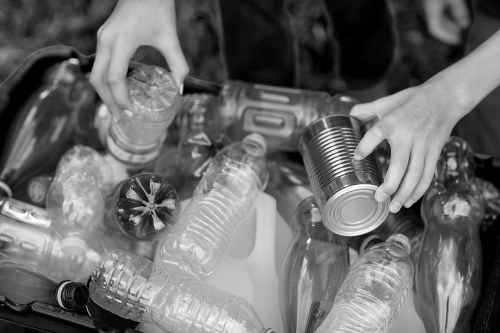 Mayfair House Clearance is committed to delivering a responsible, eco-friendly waste disposal area approach across every job we undertake. Our recycling and sustainability policy is built around practical reuse, careful sorting and low-impact transport. Whether it's a single-room clearout or a full property de-clutter in Mayfair, our emphasis is always on reducing landfill and supporting a sustainable rubbish area for the local community. We work to exceed industry norms by prioritising reuse, donation and recovery before disposal.
We set an ambitious recycling percentage target to ensure measurable improvement: 75% of all cleared materials will be diverted from landfill into recycling, reuse or donation streams within 24 months of implementation. This target reflects our dedication to being a leader in sustainable clearance services and aligns with local borough ambitions for reduced municipal waste. By measuring progress and reporting internally, Mayfair House Clearance keeps the eco-friendly waste disposal area objective central to everyday operations.
 Our crews follow the boroughs' approach to waste separation where applicable — separating dry mixed recycling, glass, textiles and food waste where residents' schemes require it. We collaborate with local councils and respect their kerbside sorting policies so that recyclable materials collected during a house clearance are prepared in the same way as household recycling. This alignment improves recovery rates at Materials Recovery Facilities (MRFs) and reduces contamination of recyclable streams.
Practical Steps: Transfer Stations, Materials Recovery and Local Partners
We operate with clear, practical logistics in mind: cleared items are taken to authorised local transfer stations and MRFs rather than to general landfill where possible. Our standard route planning makes use of nearby council transfer points and sorting facilities, including municipal transfer stations and the London-area Materials Recovery Facilities that accept segregated loads. These local transfer stations play a crucial role in the circular flow of materials back into manufacturing and community reuse.
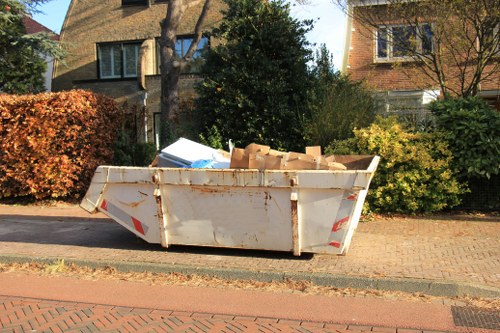 To maximise the capture of reusable goods, Mayfair House Clearance maintains long-term partnerships with charities and social enterprises that operate in and around central London. We regularly divert furniture, working appliances, books and textiles to charities such as Oxfam, Emmaus-style social hubs and local community groups that can refurbish and redistribute items. Donations are processed to ensure safety and usability — your unwanted furniture can become a valuable resource for families in need.
Our network also includes specialist recycling outlets for electricals (WEEE), metal recyclers and certified textile recyclers. Where an item is beyond reuse, parts are reclaimed and materials are channelled into the correct recycling stream. We maintain documentation of transfers to authorised processors to support transparency and to demonstrate progress toward our sustainable rubbish area targets.
Low-Carbon Transport and Sustainable Operational Choices
As part of our low-emission plan, Mayfair House Clearance uses a fleet of low-carbon vans and electrified vehicles for inner-city clearances wherever possible. Our vehicles include electric vans for short runs, hybrid models for longer journeys and Euro 6 standard transport for other tasks, contributing to lower emissions in the Mayfair area. We also deploy cargo bikes for small-item pick-ups in congested streets, reducing idling and improving air quality.
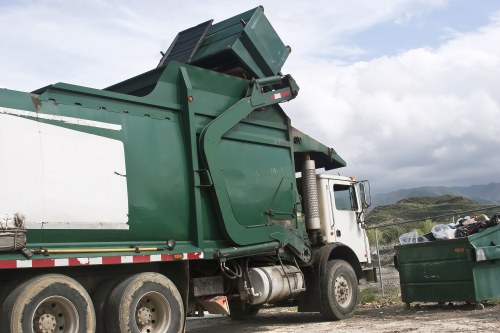 Operational choices extend beyond transport. Crews are trained to sort on-site, using labelled containers to separate wood, metal, glass, paper and residual waste, following the prevailing borough rules on separation. This on-site segregation increases the efficiency of delivery to local transfer stations and decreases the need for secondary sorting, enhancing the recyclability of materials and supporting a cleaner, more sustainable rubbish area in the community.
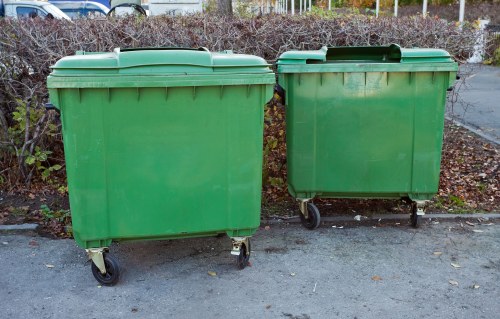 Our sustainable clearance services include audits of reusable materials, clear reporting on what was diverted from landfill and recommendations for clients who want to further reduce their environmental footprint. We track key metrics such as tonnes diverted, percentage recycled, and CO2 saved through low-carbon transport choices. These metrics help us refine operations and make data-driven improvements to our eco-friendly waste disposal area strategy.
To support circular economies and community resilience, we list typical items that are prioritised for reuse or specialist recycling:
- Furniture and Homewares: Refurbished where possible and donated to partner charities.
- Electricals (WEEE): Processed through authorised collectors and dismantlers to recover metals and components.
- Textiles and Clothing: Sorted for resale, reuse or certified textile recycling.
- Metals, Glass and Wood: Segregated for recycling into construction or manufacturing feedstocks.
Mayfair House Clearance is not only a house clearance company — we are a local partner in creating an enduring, greener future for central London neighbourhoods. By integrating partnerships with charities, cooperation with local transfer stations and a commitment to low-carbon vans and sustainable working practices, we help ensure that the city's waste becomes a resource rather than a burden. Our ongoing targets and community-minded operations set a practical, measured path to a truly eco-friendly waste disposal area and a resilient sustainable rubbish area for Mayfair and the surrounding boroughs.
We continuously review policy and practice to stay aligned with borough waste strategies, new recycling technologies and the evolving network of reuse organisations. Mayfair House Clearance will keep improving its recycling percentage target and operational footprint so that every clearance contributes positively to a more circular, low-carbon urban environment.